Davide Spazian, Sales Director Italy - Utility Scale at Ingeteam, takes stock of the energy market: from record-breaking storage systems to strategies heading toward 2027 to win the global competition through quality and R&D
From grid capacity to intelligent peak power management: where is the European electrification market heading? While 2025 set historic records for battery energy storage installations and the EV sector continues to evolve, challenges surrounding permitting, infrastructure, and investment remain open. We discussed these topics with Davide Spazian, Sales Director Italy - Utility Scale at Ingeteam. From pilot solutions for ultra-fast charging to strategies for consolidating presence in Italy and Eastern Europe, Spazian explains how European-made innovation, R&D, and integrated technology represent the true competitive edge in the global market.

Looking at the European electrification of the market, we are witnessing uneven growth across different sectors. From your privileged vantage point, what is the current state of health of the market, and what are the main bottlenecks or accelerators driving its growth?
The European market is growing, but with varying dynamics: in utility-scale, we see a strong push for photovoltaics and BESS (Battery Energy Storage Systems), which are essential for integrating more renewables and making the grid flexible. In 2025, 36 GWh of new battery storage capacity was installed in Europe, marking a 48% growth compared to the previous year and surpassing a cumulative capacity of 100 GWh overall—a record for the twelfth consecutive year.
The main bottlenecks remain grid access, permitting timelines, and project revenue certainty; in the EV sector, infrastructure costs and the need to support high-power charging also weigh heavily. Conversely, market growth is accelerated by the electrification of fleets and consumption, the deployment of renewables, and the integration of photovoltaics, storage, and charging infrastructure. For Ingeteam, the priority is to deliver solutions that coordinate these technologies and help operators and businesses better manage power and energy.
The European electrification market is undoubtedly growing, but it is moving at different speeds. For instance, in the first half of 2026, battery electric cars accounted for 20.7% of new registrations in the EU, with significant variations among member states. More than one in five cars hitting European roads in the EU is electric, but drivers are no longer just looking for "a place to charge"; they want a fast, widespread, and simple experience that increasingly mirrors traditional refueling.
For Ingeteam, this trend confirms that the transition does not depend solely on vehicle adoption, but also on the ability to build reliable and economically sustainable charging infrastructures. The main obstacles are upfront costs, grid connection timelines and availability, alongside the need to ensure adequate charger utilization. Driving the market forward are fleet electrification, high-power charging, and integration with PV and storage systems. Through Ingeteam-branded charging stations and dynamic power management systems, Ingeteam helps optimize available resources and curtail power peaks, providing scalable solutions tailored to site requirements and grid availability.
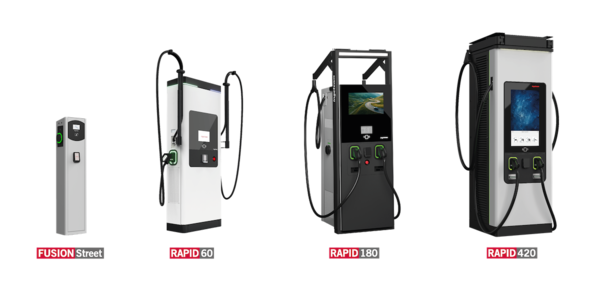
Photovoltaics, BESS systems, and electric mobility: How do these business lines integrate into your commercial offering today, and what competitive advantage does being an end-to-end energy management technology supplier provide?
Our portfolio integrates photovoltaics, BESS storage systems, and electric mobility across residential, commercial & industrial (C&I), and utility-scale applications. Ingeteam inverters, batteries, and charging stations work in unison to coordinate generation, storage, and consumption: solar energy powers electric vehicles, while excess energy is stored in the BESS system to be deployed when needed and help mitigate power peaks.
Being an end-to-end technology partner means offering the customer an integrated system that is simpler to design and manage, backed by a single point of contact for service and maintenance. Furthermore, the solution can evolve over time based on system demands, ensuring higher flexibility and efficiency.
In the field of electromobility, the real challenge is shifting from the availability of charging points to the grid's capacity to support high power loads. What technological solutions are you offering?
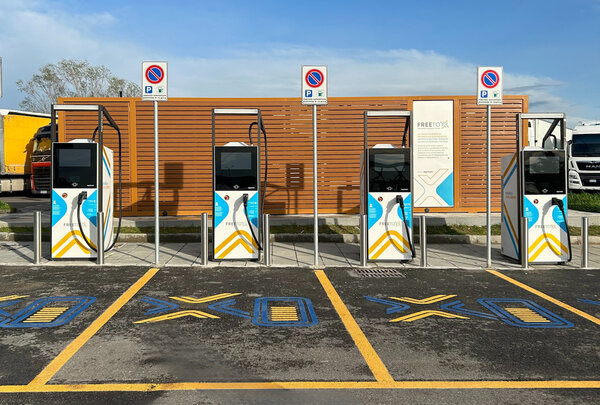
This challenge cannot be addressed simply by installing higher-power chargers: it requires combining charging, storage, and intelligent power management. At Bevano Est, in our pilot project with Free To X, four Ingeteam RAPID ST200 One ultra-fast stations are paired with a BESS system that compensates for limited grid power availability. With a nominal grid draw of just 80 kW, the system supplies up to 400 kW of charging power via a DC bus; by adding further LFP storage, capacity can reach 700 kW. The DC bus is also designed to integrate photovoltaics in the future, with a total system capacity exceeding 1 MW. Centralized power is dynamically distributed among satellite chargers based on real-time vehicle demand.
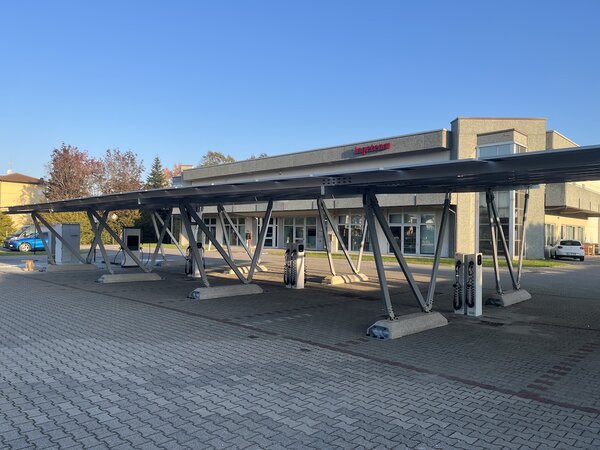
Another example is the Solar Park at our Castel Bolognese facility: a 50 kWp solar canopy, a 110 kWh storage system, and 16 charging points—including Fusion stations and a RAPID 60—dedicated to our corporate fleet. INGECON SUN inverters and intelligent charge management maximize self-consumption and minimize grid draw. These solutions enable high-power charging, shave power peaks, and create flexible, scalable infrastructure.
Looking ahead to 2027, which geographic regions and application sectors do you consider most strategic and promising for your business?
Looking to 2027, Italy will remain a primary market for us: we see strong opportunities in large-scale BESS systems and utility-scale PV plants, particularly in areas where renewable production and grid capacity demand flexibility solutions. Our participation in one of Italy’s largest storage projects underscores the value of this segment.
In parallel, we are targeting the C&I sector—where PV, storage, and EV charging help businesses optimize consumption and peak loads—as well as high-power EV infrastructure. Geographically, beyond Italy, we are looking at Eastern European markets, particularly Poland and Romania, where the growth of renewables and storage is driving demand for integrated solutions. Our priority will be delivering our end-to-end technology where it creates tangible value for customers and operators.
In a highly competitive global context where Asian players hold significant market share, how does Ingeteam plan to expand and consolidate its position in these key markets?
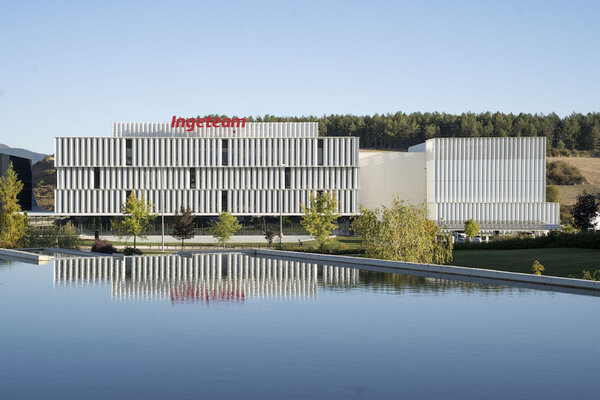
We do not intend to compete solely on price: we aim to stand out through innovative, reliable technology tailored to local market requirements and supported throughout the entire plant lifecycle. To this end, we invest 5% of our annual turnover in R&D and have made a major investment in a new 12,000-square-meter technology hub near Pamplona, home to our headquarters. The facility accommodates around 200 professionals and houses a state-of-the-art center dedicated to power and control electronics, conducting testing and simulations for wind, solar, green hydrogen, energy storage, and EV charging sectors.
This investment forms part of Ingeteam’s strategic roadmap to support the energy transition and sustainability. In a fast-evolving industry, the ability to seamlessly integrate photovoltaics, BESS, and e-mobility provides a concrete advantage to anyone seeking performance, flexibility, and operational continuity.
What will be your key strategic levers among local partnerships, technological customization, and high-value services?
Our key drivers will be collaboration with local partners and installers, tailoring solutions to specific grid and project requirements, and providing close-to-customer technical support. We will also invest in training, monitoring, and post-sales services - elemts that reduce operational risks and help costumers maximize their investment value over time. That is how we plan to consolidate our footprint: with an integrated offering and technical expertise that accompanies the client from design through to plant operations.
This article was realized in collaboration with Rinnovabili.
PUBLICATION
13/10/2026
Other related news

04/09/2026
Agrivoltaic suitable areas in Italy, a fast-evolving regulatory framework
05/02/2025

15/07/2025

05/10/2026
Electric cars, record sales in Europe: boom driven by lower prices and rising fuel costs

03/02/2025
10/07/2023

21/02/2025

05/10/2026
Electric company fleets and electric cars: why Italy is lagging behind Europe and what it needs to catch up

13/06/2025
Solar photovoltaic capacity worldwide surpasses 2.2 TW in 2024

04/09/2026
Photovoltaics module technology accelerates beyond 25% efficiency
15/10/2025
26/08/2025
The contribution of renewables to the climate fight
29/10/2025
European PPA Market: challenges and opportunities
20/10/2023

05/10/2026
The electric car as a grid battery: where does Vehicle-to-Grid stand?